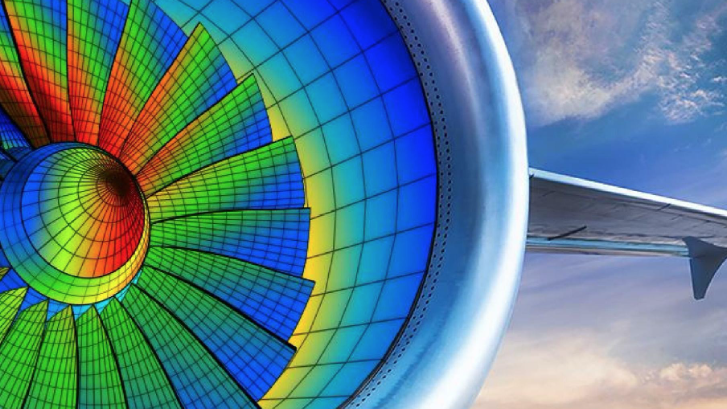
Simulation allows early, safe, and confident evaluation before building physical prototypes. This example presents a Simcenter FEMAP structural simulation of a three-piece car rim, evaluating stress distribution caused solely by internal tyre pressure.
Isolating Internal Pressure Effects
In this setup, the rim is modelled as free-floating, with no external constraints or additional forces. Only the air pressure inside the tyre acts on the structure.
By isolating this load case, the analysis directs attention to:
- How internal pressure is transferred through the rim geometry
- Where stresses naturally concentrate
- How the rim deforms under pressure alone.
This regulated environment clarifies pressure-induced behaviour without interference from other variables.
Structural Analysis with Simcenter FEMAP
This study uses structural finite element analysis (FEA) with linear static loading. Simcenter FEMAP’s pre- and post-processing capabilities enable engineers to:
- Build detailed FE models of complex, multi-piece assemblies.
- Apply realistic pressure loads accurately.
- Visualise stress and deformation results clearly.
- Assess whether a design satisfies performance and safety expectations.
For components such as wheels and rims, where geometry and load paths are complex, this insight is essential.
Validating Designs Before Production
Even routine operating loads can reveal unexpected stress profiles. Performing simulations early in the design process helps engineers to:
- Validate designs before manufacturing.
- Lower reliance on costly physical prototyping.
- Detect potential weaknesses early.
- Make informed design improvements with confidence.
This pressure-only analysis regularly serves as a baseline for later studies on fatigue, impact, or combined loading cases.
Smarter Decisions Through Simulation
By replicating actual conditions virtually, simulation supports better design decisions throughout development. This rim example shows how structural analysis helps engineers understand structural response, reduce risk, and ensure designs are ready for actual use before production.